Degrees in Hand, No Destination: Youth Unemployment in Pakistan
Official figures say 11%. The reality, as a teacher sees it, is far harsher.
Introduction
Pakistan is one of the youngest nations in the world, with young people making up the largest share of its population. This demographic strength could be the country's greatest asset, yet it is increasingly turning into a source of concern. Every year, hundreds of thousands of students graduate from universities with high hopes, only to find that the economy cannot create enough opportunities to absorb them. As a result, a generation that has invested years of effort, and whose families have often made great sacrifices, is left holding degrees without a clear path forward.
Statistics and Personal Analysis
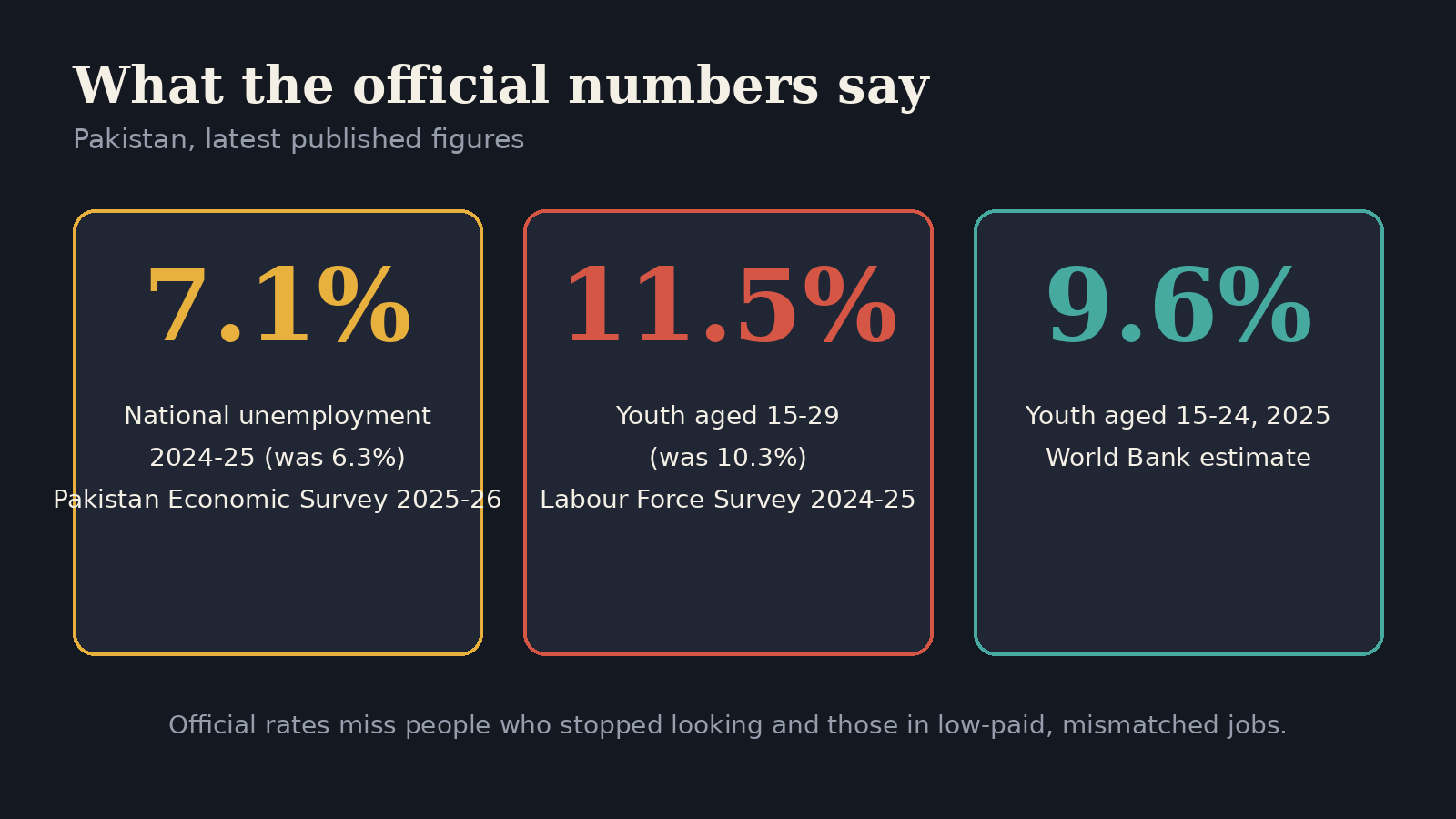
According to the Pakistan Economic Survey 2025-26, the national unemployment rate rose to 7.1% in 2024-25, up from 6.3% the previous year. Among young people aged 15 to 29, the rate rose from 10.3% to 11.5%, and World Bank data puts unemployment among those aged 15 to 24 at 9.6% in 2025. However, these official figures do not capture young people who have stopped looking for work, those who are neither in education, employment nor training (NEET), or graduates working in jobs far below their qualifications and pay expectations.
Personal analysis:
In my analysis, around 90 percent of young people in Pakistan are either unemployed or underemployed. They are jobless, working far below their qualifications, or earning salaries that cannot cover basic living costs. This is my own assessment, drawn from what I see around me, not an official survey figure. Official statistics only count those actively seeking work, and so they miss the large number who have given up, who work in unrelated jobs, or who earn too little to live on. By this broader measure, nearly every young graduate I observe is struggling.
Causes
Education-market mismatch: Curricula are outdated and rely heavily on rote learning, while employers demand practical skills.
Weak economy: Inflation, low investment and instability limit the growth of businesses and the creation of jobs.
Nepotism: Hiring often depends on connections rather than merit, discouraging hardworking candidates.
The experience trap: Employers ask for experience from fresh graduates, who cannot gain experience without first being hired.
Preference for government jobs: Many families still see public-sector employment as the only secure path, which narrows the options young people consider.
Political Infighting and Lack of Policy
Many young people feel that those in power are consumed by rivalries and the struggle for authority, leaving little attention for the concerns of the next generation. Long-term policies on education and employment are rarely sustained, as new governments often abandon the plans of their predecessors. Election promises to young people are frequently left unfulfilled. This criticism applies to the political culture as a whole rather than to any single party.
The Human Side
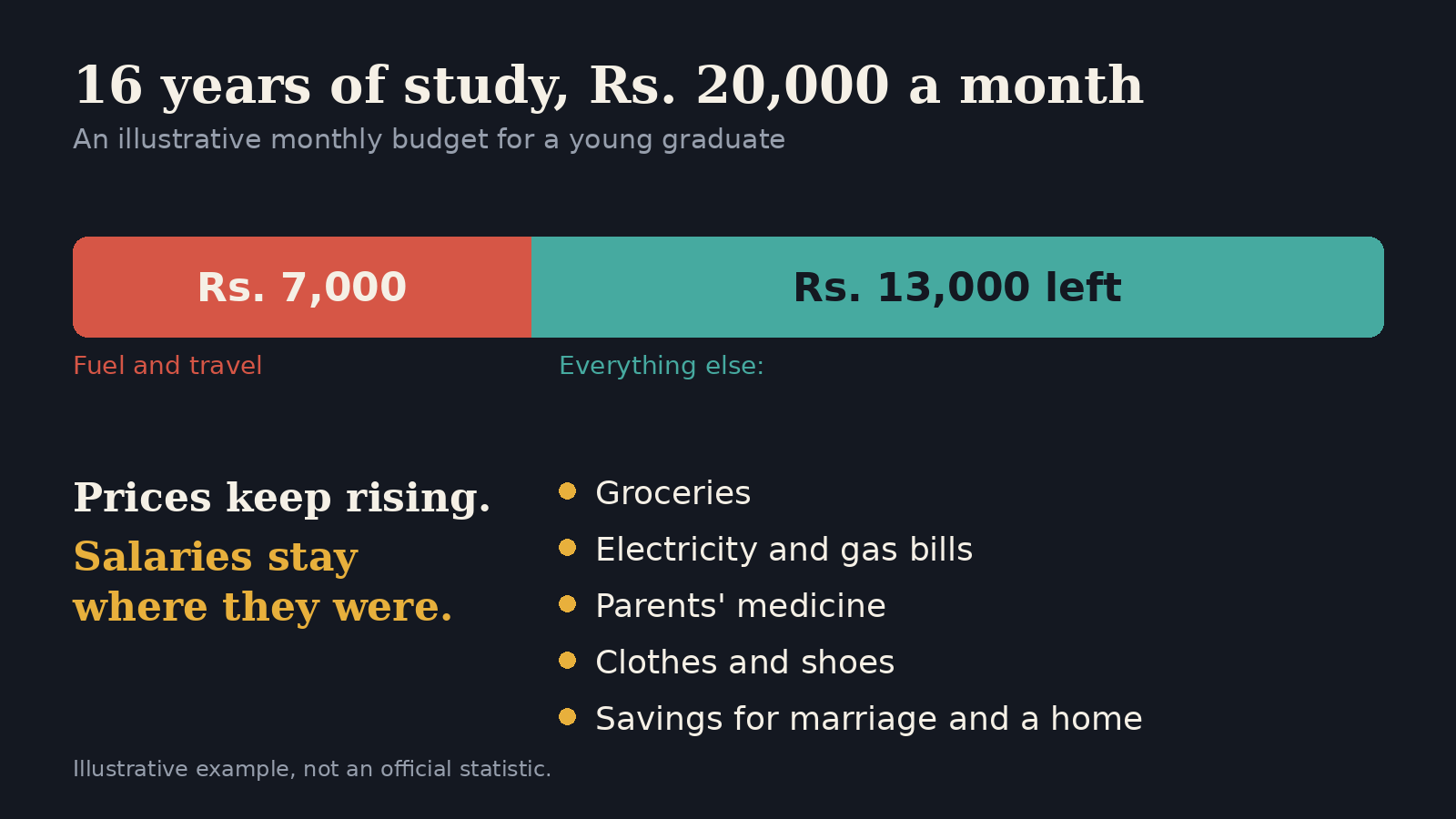
Consider a poor father who spends a lifetime working so that his son can study. He wears old shoes so the fees can be paid, takes on extra work and borrows money, all in the hope that his son's degree will change the family's fortunes. After sixteen years of study, the son is offered a job paying Rs. 20,000 a month. Around Rs. 7,000 goes on fuel and transport, leaving Rs. 13,000 to cover groceries, utility bills, a parent's medicine, clothing and everything else. With fuel and living costs rising while salaries stay flat, marriage and a home of his own become distant dreams. He begins to ask himself painful questions: how long must he keep waiting for promises to be kept, and was it a mistake to build his hopes here?
Health Effects
Prolonged financial stress takes a toll on the body as well as the mind. Sleep suffers, irritability and low mood increase, and over time the risk of high blood pressure, heart disease and diabetes rises. Cardiologists report that roughly 15% of heart attacks in Pakistan now occur in people under 40. Their explanations include chronic stress alongside poor diet, physical inactivity, smoking and lack of sleep. Unemployment and financial pressure are therefore an important contributing factor, though not the only one.
Solutions
- Modernize curricula to include IT, communication and technical skills.
- Make internships and industry partnerships a standard part of university education.
- Promote freelancing, e-commerce and digital skills.
- Provide easy access to credit and guidance for small businesses.
- Strengthen merit-based recruitment.
- Adopt a national youth policy that survives changes of government and gives young people a voice in decision-making.
- Encourage young people themselves to build skills and speak up for their future.
Conclusion
Youth unemployment is not merely a family's private misfortune. It is a national challenge with economic, social and health consequences. Yet Pakistan's young people are also hardworking, resilient and talented. With sound education, fair wages and merit-based opportunities, they can become the country's greatest strength. The question is not whether this generation will break under the pressure, but how soon the country will act to support it.
"I write about youth, education and employment in Pakistan. My work looks at the gap between degrees and opportunities, and the real-life struggles of a generation trying to build a future." Is ke baad essay ko Telloft par paste karne se pehle do cheezein dekh lein: Title ke taur par ye rakh sakte hain: "Degrees in Hand, No Destination: Youth Unemployment in Pakistan" Essay ke aakhir mein sources likh dein (Pakistan Economic Survey 2025-26, Labour Force Survey 2024-25, World Bank) taake parhne wale ko aankre par bharosa ho.



Log in to join the conversation.